
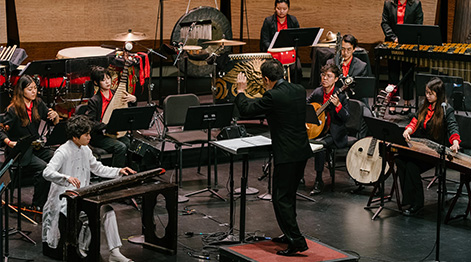
Bard High School Preparatory Program for Chinese Music (U.S.)

Overview

In 2018, with the support of the Central Conservatory of Music in China, the Bard College Conservatory of Music established the (US-China Music Institute of the Bard College Conservatory of Music),a groundbreaking initiative of historic significance.
(US-China Music Institute of the Bard College Conservatory of Music) 。
It is the first conservatory in the West to establish a degree program in Chinese music, and remains the only institution in the United States offering such a program to this day.
As the influence of the program continues to grow, the Institute seeks to discover more promising young talents in Chinese music and to nurture musicians with global artistic vision and impact. In 2024, the U.S.–China Music Institute of the Bard College Conservatory of Music, in collaboration with BEAM, launched the High School Preparatory Program in Chinese Music.
Through music, the program promotes cultural exchange between the East and the West. It encourages students who have studied Chinese music from a young age to step onto the global stage and share the beauty of their musical heritage with the world. At the same time, it also aims to inspire more international students to learn Chinese instruments and explore Chinese culture through music.

Why study Chinese music in the United States?

Everyone may view this question from a different perspective. Some students of Chinese music aspire to stand on the world’s great stages and become ambassadors of cultural exchange. Others—music educators and visionaries—hope to plant the seeds of Chinese music in Western institutions, just as Western music was introduced into Chinese conservatories a century ago.
Bard College President Leon Botstein once said:"The establishment of the U.S.–China Music Institute is highly significant, as it brings the teaching of Chinese instruments and music into the educational framework of Western conservatories."
These students receive instruction in Chinese instrument performance from faculty at the Central Conservatory of Music in China, while being immersed in the social and cultural environment of the United States and receiving a high-quality liberal arts education. Upon graduation,they are awarded two degrees.
在西方The purpose of offering a Chinese music program in Western institutions is to cultivate a new generation of Chinese music professionals who are not only highly skilled performers, but also independent-minded leaders capable of guiding the exchange and development of Chinese and Western music on the global stage with innovative thinking.

A streamlined pathway for college admission
Bard College will offer BEAM students a streamlined pathway for college admission. Students who meet the requirements in their music program and maintain satisfactory academic performance in high school may receive English proficiency concessions. The U.S.–China Music Institute at Bard accepts TOEFL, IELTS, and Duolingo English Test scores. Students whose English scores fall below the regular admission standards of the College are required to take English intensive courses during their first year of university.
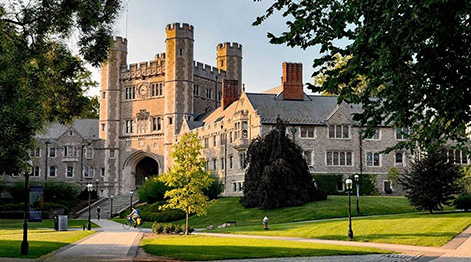
University scholarships of at least 50%
BEAM students who meet the admission requirements for Bard College may receive university scholarships of at least 50%, depending on their family circumstances. For outstanding students from financially disadvantaged families, Bard College can offer more substantial scholarships.
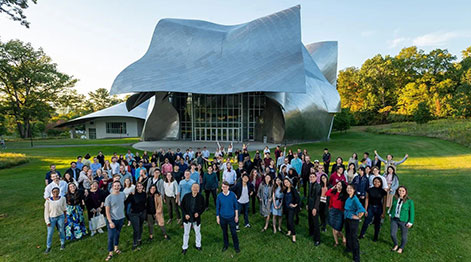
Students have greater opportunities for interaction and communication with Bard College faculty.
Through masterclasses, lectures, and concerts, Bard College and BEAM deepen their collaboration in teaching and performance. Students are able to engage with Bard faculty during their high school years, laying a solid foundation for their future university studies.

Admissions – Majors
Currently, the program admits students specializing in dizi, erhu, guqin, guzheng, Chinese percussion, pipa, ruan, sheng, suona, and yangqin (students playing other instruments may be considered on a case-by-case basis).
BEAM , LET THE MUSIC BEGIN!
BEAM, Let the music begin!